
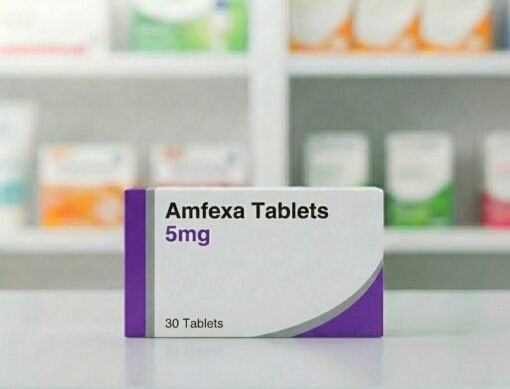
Buy Amfexa Tablets UK

Price range: £210.00 through £530.00
Amfexa Tablets are an MHRA-licensed, NHS-prescribed stimulant medication containing dexamfetamine sulphate — a clinically proven treatment for Attention Deficit Hyperactivity Disorder (ADHD) in children aged 3 and over, adolescents, and adults across the United Kingdom.
Amfexa Tablets UK: The MHRA-Licensed Dexamfetamine Treatment for ADHD
Amfexa Tablets are a UK-licensed, NHS-prescribed central nervous system (CNS) stimulant indicated for the treatment of Attention Deficit Hyperactivity Disorder (ADHD) in children aged 3 years and over, adolescents, and adults. Manufactured by Euro-Pharm International Canada Inc and distributed in the United Kingdom, Amfexa is one of the leading branded formulations of dexamfetamine sulphate available through NHS community pharmacies and private dispensing services across England, Scotland, Wales, and Northern Ireland.
As awareness of ADHD continues to grow in the UK, Amfexa Tablets have become an increasingly important part of the pharmacological landscape for patients and clinicians alike. Whether you are a newly diagnosed adult, a parent seeking information about a child’s ADHD prescription, or a healthcare professional looking for a concise clinical summary, this complete UK product guide covers everything you need to know about Amfexa Tablets — including how they work, recommended dosage, side effects, regulatory status, and how to obtain a valid prescription through NHS or private pathways.
What Are Amfexa Tablets? Product Overview for UK Patients
Amfexa is the brand name for dexamfetamine sulphate tablets, a Schedule 2 Controlled Drug licensed by the Medicines and Healthcare products Regulatory Agency (MHRA) for use in the United Kingdom. Each tablet contains either 5mg or 10mg of dexamfetamine sulphate as the active ingredient, making Amfexa one of the few branded dexamfetamine products widely available on both NHS and private prescriptions in the UK.
Dexamfetamine is the dextrorotatory isomer of amphetamine — a CNS stimulant with a well-established clinical profile in ADHD pharmacotherapy. Unlike some newer long-acting formulations, Amfexa Tablets are an immediate-release preparation, offering clinicians and patients the flexibility to tailor the dosing regimen to individual daily routines, school schedules, and occupational demands. This makes Amfexa particularly suitable for patients who need precise, adjustable control over when their ADHD medication is active throughout the day.
Key Product Information
Brand Name: Amfexa
Active Ingredient: Dexamfetamine Sulphate (INN) / Dexamphetamine Sulphate (BAN)
Manufacturer: Euro-Pharm International Canada Inc
Available Strengths: 5mg and 10mg tablets
Dosage Form: Oral Tablets (immediate-release)
Drug Class: CNS Stimulant / Amphetamine
Regulatory Status (UK): MHRA Licensed
NHS Status: Specialist-initiated; GP continuation under Shared Care Agreement
Controlled Drug Schedule (UK): Schedule 2 — Misuse of Drugs Regulations 2001
Drug Class (MDA 1971): Class B Controlled Drug
Duration of Action: Approximately 4 to 6 hours per dose
Approved Age Range: 3 years and above (specialist supervision required)
SmPC Reference: Available via the MHRA/EPAR product database
Amfexa Tablets Indications: Who Is This Medication For?
1. Attention Deficit Hyperactivity Disorder (ADHD) in Children
Amfexa Tablets are primarily indicated for the treatment of ADHD in children aged 3 years and above. Under NICE Clinical Guideline NG87 (Attention Deficit Hyperactivity Disorder: Diagnosis and Management), dexamfetamine — and by extension Amfexa — is recommended as a second-line pharmacological option for children when methylphenidate-based medicines have not produced an adequate therapeutic response, are not tolerated, or are otherwise clinically inappropriate.
In children, ADHD manifests as a persistent, pervasive pattern of inattention, hyperactivity, and impulsivity that impairs functioning across settings including school, home, and social environments. Amfexa Tablets help to reduce these core symptoms by enhancing dopaminergic and noradrenergic neurotransmission in the prefrontal cortex — the region of the brain most responsible for attention, executive function, and behavioural regulation. Clinical benefits typically include improved concentration and task completion, reduced disruptive classroom behaviour, better social interactions, and enhanced self-regulation.
2. Attention Deficit Hyperactivity Disorder (ADHD) in Adults
Amfexa Tablets are equally indicated for adults diagnosed with ADHD. Adult ADHD is characterised by chronic difficulties with sustained attention, organisational skills, time management, impulsivity, and emotional dysregulation. These challenges frequently impact occupational performance, interpersonal relationships, financial management, and overall quality of life. Amfexa provides effective symptomatic control for adult patients who require a short-acting, flexible stimulant regimen that can be adapted to shift patterns, variable working hours, or complex daily schedules.
NICE guideline NG87 recommends that pharmacological treatment for adults with ADHD should be considered as part of a comprehensive management plan that includes psychoeducation, coaching, and where appropriate, cognitive behavioural therapy (CBT). Amfexa Tablets are a clinically validated component of this treatment pathway.
3. Narcolepsy (Specialist Use)
Amfexa Tablets may also be used under specialist supervision for the management of narcolepsy — a chronic neurological sleep disorder characterised by excessive daytime sleepiness, sudden loss of muscle tone (cataplexy), sleep paralysis, and hypnagogic hallucinations. This indication is less commonly encountered in routine UK prescribing but remains a recognised use within specialist sleep medicine centres.
How Amfexa Tablets Work: Mechanism of Action Explained
Amfexa Tablets contain dexamfetamine sulphate, an immediate-release CNS stimulant that acts directly on the monoamine neurotransmitter systems of the brain. Because Amfexa is not a prodrug — unlike lisdexamfetamine (Elvanse) — it becomes pharmacologically active immediately upon absorption into the bloodstream, without requiring enzymatic conversion.
Dopamine System Effects
Following oral ingestion, dexamfetamine is rapidly absorbed from the gastrointestinal tract and crosses the blood-brain barrier. Within the brain, it acts as a substrate at the dopamine transporter (DAT), triggering a reversal of normal transporter function and causing a large-scale efflux of dopamine from presynaptic neuronal terminals into the synaptic cleft. Simultaneously, dexamfetamine competitively inhibits the reuptake of dopamine, further elevating synaptic dopamine concentrations. The result is a pronounced and sustained increase in dopaminergic signalling, particularly in the prefrontal cortex and nucleus accumbens.
Noradrenaline System Effects
In parallel, dexamfetamine promotes the release of noradrenaline (norepinephrine) from presynaptic nerve terminals and inhibits its reuptake via the noradrenaline transporter (NET). Elevated noradrenergic tone within the prefrontal cortical circuits is associated with significant improvements in working memory, sustained attention, cognitive flexibility, and impulse control — all of which are impaired in ADHD.
Clinical Outcome
The combined dopaminergic and noradrenergic actions of Amfexa produce a strengthening of the signal-to-noise ratio in prefrontal cortical networks — effectively allowing patients to filter out distractions, maintain focus on goal-directed tasks, regulate impulsive responses, and manage their time and behaviour more effectively. Because Amfexa is an immediate-release formulation, onset of clinical effect typically occurs within 30 to 60 minutes of ingestion, with peak plasma concentrations reached at approximately 1 to 2 hours. The therapeutic window of a single dose spans approximately 4 to 6 hours, necessitating two or three daily doses for full daytime coverage in most patients.
Amfexa Tablets Dosage and Administration: UK Prescribing Guide
Dosage in Children (3 to 5 Years)
For children aged 3 to 5 years, the British National Formulary (BNF) recommends an initial dose of 2.5mg twice daily, to be increased in increments of 2.5mg at weekly intervals according to clinical response. This age group requires particularly careful specialist supervision, and treatment at this age should only be initiated by a consultant paediatrician or child and adolescent psychiatrist with expertise in ADHD.
Dosage in Children (6 Years and Over) and Adolescents
For children aged 6 years and above and adolescents, the standard recommended starting dose of Amfexa is 5mg once or twice daily, titrated in 5mg increments at weekly intervals. The usual therapeutic maintenance range is 10mg to 20mg per day in divided doses, with a maximum daily dose of 20mg in children. Adolescents may require doses at the higher end of this range and may benefit from three daily doses to cover the full school and homework period.
Dosage in Adults
For adults with ADHD, the recommended starting dose of Amfexa is 5mg twice or three times daily, with titration in 5mg increments at weekly intervals based on therapeutic response and tolerability. Most adults achieve adequate symptom control at doses of 20mg to 30mg per day in divided doses. Under specialist supervision, doses up to 40mg per day may be used, though higher doses carry an increased risk of adverse effects and require close monitoring of cardiovascular parameters.
How to Take Amfexa Tablets
Amfexa Tablets should be swallowed whole with a glass of water and may be taken with or without food, although taking them with food may help reduce the likelihood of nausea or stomach discomfort. The first dose of the day should be taken in the morning, and subsequent doses should be spaced 4 to 6 hours apart. To minimise the impact on sleep quality, the final daily dose should ideally be administered no later than 4pm. Tablets must not be crushed, chewed, or dissolved unless specifically advised by a clinician.
What to Do If a Dose Is Missed
If a patient misses a dose of Amfexa, they should take it as soon as they remember — provided it is still early in the day and it is not close to the time of the next scheduled dose. If it is late afternoon or approaching evening, the missed dose should be omitted entirely to prevent insomnia. Patients must never take a double dose to compensate for a missed one. If uncertain, the prescribing specialist, GP, or NHS pharmacist should be consulted.
Amfexa Tablets Side Effects: Full UK Patient Information
Very Common and Common Side Effects
Clinical trials and post-marketing surveillance have identified the following as the most frequently occurring side effects of Amfexa Tablets in UK patients: decreased appetite and consequent weight loss, dry mouth, insomnia and disturbed sleep, headache, irritability and mood changes, increased heart rate and palpitations, raised blood pressure, abdominal discomfort or nausea, dizziness, and restlessness or agitation. Most of these effects are dose-related and may diminish progressively as the body adapts to treatment over the initial weeks of therapy.
Less Common but Clinically Relevant Side Effects
Less frequently reported side effects of Amfexa include growth retardation in children and adolescents with long-term use, which necessitates regular monitoring of height, weight, and growth velocity by the prescribing specialist. Tics or exacerbation of pre-existing tic disorders may occur and should prompt a clinical review. Other less common effects include increased anxiety, low mood or dysphoria, and sexual dysfunction in adult patients.
Serious and Rare Side Effects — Seek Medical Attention
Although uncommon, serious adverse reactions have been reported with dexamfetamine products including Amfexa. These include new or worsening psychosis-like symptoms such as hallucinations, paranoia, or delusional thinking,
severe cardiovascular events including arrhythmia and hypertensive crisis, serious hypersensitivity reactions including angioedema and anaphylaxis, Raynaud’s phenomenon (colour changes and numbness in the extremities), priapism (a prolonged, painful erection in males requiring immediate medical attention), and rhabdomyolysis (breakdown of muscle tissue). Patients experiencing any of these should stop treatment and seek urgent medical assessment.
Growth Monitoring in Paediatric Patients
In children and adolescents, prescribers must monitor height and weight at regular intervals — typically every six months — in accordance with NICE and BNF guidance. If a child’s growth rate is significantly reduced, a temporary treatment holiday or dose reduction should be considered in consultation with the responsible specialist.
How to Report Side Effects in the UK
Healthcare professionals and patients in the UK can report suspected adverse reactions to Amfexa Tablets directly to the MHRA via the Yellow Card reporting scheme, accessible at yellowcard.mhra.gov.uk. Reporting helps the MHRA maintain ongoing pharmacovigilance and ensures the continued safety of all licensed medicines in the UK.
Drug Interactions and Contraindications for Amfexa Tablets
Key Drug Interactions
Amfexa Tablets have several clinically important interactions with other medicines that prescribers and patients must be aware of. Monoamine oxidase inhibitors (MAOIs) — including phenelzine, tranylcypromine, moclobemide, and isocarboxazid — are absolutely contraindicated in combination with Amfexa due to the potentially life-threatening risk of hypertensive crisis and serotonin syndrome. This contraindication extends to 14 days following discontinuation of any MAOI. Serotonergic drugs such as SSRIs, SNRIs, triptans, and tramadol may increase the risk of serotonin syndrome when co-administered with Amfexa and should be used only with extreme caution. Tricyclic antidepressants may have their plasma levels elevated by dexamfetamine. Antihypertensive agents may be rendered less effective. Urinary acidifying agents such as ammonium chloride may lower amphetamine plasma concentrations, while urinary alkalinising agents such as sodium bicarbonate may prolong its half-life. Patients should inform all prescribers and their pharmacist about all medicines, supplements, and herbal remedies they are taking.
Absolute Contraindications
Amfexa Tablets must not be used in patients with: known hypersensitivity to dexamfetamine sulphate or any excipient listed in the SmPC; current or recent use of an MAOI within the past 14 days; symptomatic cardiovascular disease or advanced arteriosclerosis; moderate to severe hypertension; hyperthyroidism; closed-angle glaucoma; a confirmed or suspected history of substance misuse or dependence; states of agitation or anxiety; or a personal or family history of psychosis or mania. Amfexa should be used with extreme caution during pregnancy and is not recommended during breastfeeding.
Amfexa vs. Other UK ADHD Medicines: Comparison Table
| Feature | Amfexa 5mg/10mg | Elvanse (Lisdexamfetamine) | Ritalin (Methylphenidate IR) | Concerta XL (MPH LA) | Strattera (Atomoxetine) |
| Active Ingredient | Dexamfetamine | Lisdexamfetamine | Methylphenidate | Methylphenidate | Atomoxetine |
| Release Type | Immediate-release | Long-acting prodrug | Immediate-release | Long-acting | Non-stimulant |
| Duration | 4 to 6 hours | Up to 13 hours | 3 to 5 hours | Up to 12 hours | 24 hours |
| NICE Line | 2nd line | 2nd line | 1st line | 1st line | 3rd line |
| Flexible Dosing | Yes | No (once daily) | Yes | No (once daily) | No (once daily) |
| CD Schedule (UK) | Schedule 2 | Schedule 2 | Schedule 2 | Schedule 2 | Not Controlled |
| Abuse Potential | Moderate | Lower (prodrug) | Moderate | Moderate | Very low |
How to Get Amfexa Tablets in the UK: NHS and Private Routes
NHS Prescribing Pathway
In the UK, Amfexa Tablets must be initiated by an ADHD specialist — typically a consultant psychiatrist, a paediatric neurologist, or a GP with a specialist interest in ADHD working within an NHS commissioned ADHD clinic. Following an initial specialist assessment, ADHD diagnosis, and dose titration period, ongoing prescribing of Amfexa may be transferred to the patient’s GP under a locally agreed Shared Care Agreement (SCA), subject to the commissioning policies of the relevant Integrated Care Board (ICB) in England or equivalent body in Scotland, Wales, and Northern Ireland.
Patients and families should be aware that NHS ADHD assessment waiting times currently vary significantly across the UK. Many areas report waiting lists in excess of one to two years. Patients waiting for an NHS assessment may wish to explore whether their local ICB operates a Right to Choose pathway, which may allow them to access an NHS-funded assessment at a CQC-registered provider more quickly.
Private Prescribing of Amfexa
Private ADHD assessments and prescriptions for Amfexa Tablets are available from a wide range of CQC-registered private psychiatry services and online ADHD clinics operating across the UK. A private prescription for Amfexa — as a Schedule 2 Controlled Drug — must comply with the full requirements of Regulation 15 of the Misuse of Drugs Regulations 2001. This includes being signed in ink by the prescriber, containing the patient’s name and address, the total quantity of medication in both words and figures, and clear dosage instructions. Private prescriptions for Schedule 2 Controlled Drugs must be presented to the dispensing pharmacist within 28 days of the date of issue and are not valid after this period.
Prescription Rules for Schedule 2 Controlled Drugs
As a Schedule 2 Controlled Drug, Amfexa cannot be issued on a repeat prescription. Each new supply requires a fresh prescription from the initiating specialist or, under Shared Care, from the patient’s GP. NHS prescriptions for Schedule 2 CDs are typically issued for a maximum 30-day supply in line with Department of Health guidance. Patients travelling abroad with Amfexa for more than three months’ supply require a personal import or export licence from the Home Office, and it is strongly recommended that all patients carry a letter from their prescriber when travelling internationally.
Storage, Handling, and Legal Compliance
Storage Instructions for Amfexa Tablets
Amfexa Tablets should be stored at room temperature, not exceeding 25 degrees Celsius, in a dry location away from direct sunlight and humidity. They must be kept in their original blister packaging or bottle until use, and stored out of the sight and reach of children at all times. In domestic settings, Schedule 2 Controlled Drugs such as Amfexa should ideally be kept in a locked secure cabinet or container. In clinical or pharmacy settings, Amfexa must be stored in a locked Controlled Drugs cabinet meeting NHS and Home Office specifications, and all dispensing must be recorded in the Controlled Drugs register.
Legal Status of Amfexa in the UK
Amfexa Tablets are a Class B Controlled Drug under the Misuse of Drugs Act 1971 and a Schedule 2 Controlled Drug under the Misuse of Drugs Regulations 2001. Unlawful possession of Amfexa without a valid prescription carries a maximum penalty of five years’ imprisonment and/or an unlimited fine. Unlawful supply or intent to supply carries a maximum penalty of fourteen years’ imprisonment and/or an unlimited fine. It is a serious criminal offence to possess Amfexa without a current prescription or to transfer it to any other individual, regardless of their medical needs. All patients should ensure they comply fully with UK law in relation to the possession, storage, and use of this medication.
Frequently Asked Questions About Amfexa Tablets in the UK
What is Amfexa used for?
Amfexa Tablets are used for the treatment of ADHD in children aged 3 years and over, adolescents, and adults in the UK. They may also be prescribed by sleep medicine specialists for narcolepsy in some cases. Amfexa is available only on prescription and must be initiated by a qualified specialist.
Is Amfexa the same as dexamfetamine?
Yes. Amfexa is a branded formulation of dexamfetamine sulphate — the same active ingredient found in generic dexamfetamine tablets and the now-discontinued Dexedrine brand. The active ingredient, pharmacological properties, clinical indications, and prescribing rules are identical. The choice between branded Amfexa and generic dexamfetamine is typically made by the dispensing pharmacist based on stock availability and formulary preferences.
How long does Amfexa last?
Amfexa Tablets are an immediate-release formulation. The onset of clinical effect typically occurs within 30 to 60 minutes of ingestion, and the therapeutic effects last approximately 4 to 6 hours per dose. Most patients require two or three doses per day to achieve full daytime symptom coverage.
Can adults take Amfexa for ADHD in the UK?
Yes. Amfexa is licensed and commonly prescribed for adults with ADHD in the UK. Adults may access Amfexa through NHS specialist ADHD services or via private psychiatry providers. NICE guideline NG87 explicitly supports pharmacological treatment of ADHD in adults and recommends dexamfetamine as an option where methylphenidate is insufficient or not tolerated.
What is the difference between Amfexa and Elvanse?
The main difference is in their delivery mechanism and duration. Amfexa contains dexamfetamine in an immediate-release form, lasting 4 to 6 hours per dose. Elvanse contains lisdexamfetamine — a prodrug that requires metabolic conversion to active dexamfetamine — and is a once-daily long-acting formulation lasting up to 13 hours. Amfexa offers greater dosing flexibility, while Elvanse offers convenience and a potentially lower risk of misuse due to its prodrug design.
Is Amfexa available on the NHS?
Yes, Amfexa is available on NHS prescription in the UK. It must be initiated by a specialist and is subject to local Shared Care Agreement policies for ongoing GP prescribing. Standard NHS prescription charges apply unless the patient holds a valid exemption certificate. Generic dexamfetamine tablets may be dispensed in place of branded Amfexa in some NHS settings, depending on local formulary arrangements.
| quantity | 120 Tablets, 240 Tablets, 600 Tablets |
|---|
3 reviews for Buy Amfexa Tablets UK
Add a review
Related products

ADHD
ADHD
ADHD
kiki –
Absolutely love Online Meds UK! Ordering is a breeze, and my package arrived the next day. The quality is fantastic, and their team is so helpful. Five stars all the way.
Autumn Rose –
Total touchdown! Ordered on Monday, delivered Wednesday — discreet and fast. The quality is spot on and my concentration is through the roof now. No hassle, no stress, just results. I’m a happy customer and already planning my next order!”
Terrence –
I recently ordered Amfexa and everything went perfectly! The order was smooth, delivery was fast, and it arrived safely. I’m really happy with the whole process — it even says government approved right on the packaging, which gave me extra peace of mind. Super reliable service and a great product. Would definitely order again!”