
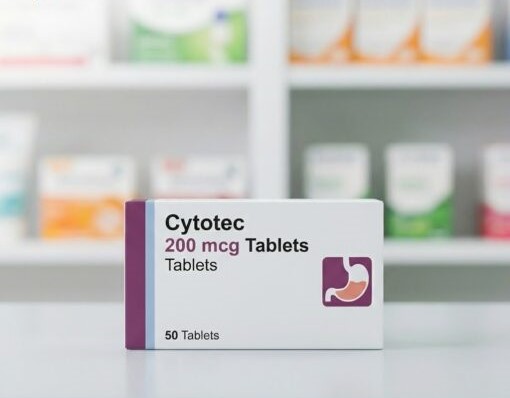
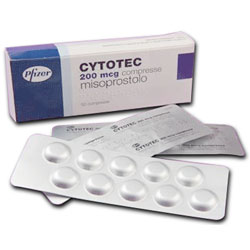


Cytotec 200 mcg (Misoprostol) — Complete Guide to Uses, Dosage, and Clinical Applications
Cytotec 200 mcg is a brand-name pharmaceutical containing Misoprostol, a synthetic prostaglandin E1 (PGE1) analog with a wide range of clinically important medical applications. First approved by the U.S. Food and Drug Administration (FDA) in 1988 as a gastroprotective agent for the prevention of gastric ulcers caused by nonsteroidal anti-inflammatory drugs (NSAIDs), misoprostol has since become one of the most versatile and widely used medications in obstetrics, gynecology, and gastroenterology worldwide.
Each Cytotec tablet contains 200 micrograms (mcg) of misoprostol as the active ingredient, formulated for oral administration. The drug can also be used sublingually (dissolved under the tongue), vaginally, rectally, or buccally (between the cheek and gum), depending on the clinical indication — each route offering different pharmacokinetic profiles that practitioners select based on onset requirements, efficacy goals, and patient-specific factors.
Misoprostol is included on the World Health Organization’s List of Essential Medicines and is recognized globally as a critical tool in reproductive health and emergency obstetric care. Its thermostability, low cost, and route flexibility make it particularly valuable in low-resource and humanitarian settings where other prostaglandin medications requiring refrigeration cannot be reliably used.
Product Overview & Key Specifications
| Brand Name | Cytotec |
| Generic Name | Misoprostol |
| Strength | 200 mcg per tablet |
| Drug Class | Prostaglandin E1 Analog |
| Pharmacological Action | Gastric acid secretion inhibitor; uterotonic; cervical ripening agent |
| Manufacturer | Pfizer Inc. (original); various generic manufacturers |
| Dosage Form | White to off-white hexagonal tablet |
| Routes of Administration | Oral, Sublingual, Vaginal, Buccal, Rectal |
| FDA Approval Date | 1988 (gastric ulcer prevention) |
| WHO Essential Medicine | Yes — included on the WHO EML |
| Prescription Status | Prescription required in most countries |
| Storage Conditions | Store below 25°C; protect from humidity |
| Pregnancy Category | X (FDA) — contraindicated in pregnancy for ulcer use; used under supervision for obstetric indications |
| Half-Life | 20–40 minutes (misoprostol acid, active metabolite) |
What Is Cytotec 200 mcg? Drug Profile & Mechanism of Action
Cytotec 200 mcg contains misoprostol, a stable synthetic analogue of naturally occurring prostaglandin E1. Unlike natural prostaglandins, misoprostol is chemically modified to resist rapid enzymatic breakdown, giving it a longer duration of action and superior oral bioavailability — making it both practical and cost-effective for a broad range of clinical applications.
Misoprostol is unique among prostaglandin analogs in its thermostability. It does not require refrigeration, unlike dinoprostone (PGE2) and other prostaglandin preparations. This characteristic has made Cytotec an essential drug in regions with unreliable cold chain infrastructure, cementing its role in global maternal health initiatives and emergency obstetric care programs.
Pharmacological Mechanism of Action
Misoprostol exerts its effects by binding to prostaglandin receptors — primarily EP2 and EP3 receptor subtypes — found in the gastric mucosa, uterine smooth muscle, and cervical tissue. The drug’s diverse clinical applications arise from its activity at these different receptor sites:
- Gastric mucosa (EP3 receptors): Misoprostol inhibits basal and stimulated gastric acid secretion, stimulates bicarbonate and mucus secretion, promotes mucosal blood flow, and enhances the integrity of the gastric epithelial barrier — collectively known as cytoprotective effects.
- Uterine myometrium (EP2/EP3 receptors): Misoprostol stimulates uterine smooth muscle contractions, increasing uterine tone and frequency of contractions — the basis for its use in labor induction, cervical ripening, and management of postpartum hemorrhage.
- Cervical tissue: Misoprostol promotes cervical softening, effacement, and dilation by stimulating collagen remodeling and increasing local prostaglandin activity — critical for cervical ripening prior to induction of labor or surgical procedures.
Pharmacokinetics of Misoprostol 200 mcg
After oral administration, misoprostol is rapidly absorbed and de-esterified to its active form, misoprostol acid. Peak plasma concentrations are reached within 12–20 minutes. The drug has a short half-life of approximately 20–40 minutes for the active acid metabolite, necessitating either frequent dosing or the use of routes (sublingual, vaginal) that provide more sustained absorption profiles. Misoprostol is primarily metabolized in the liver and excreted renally.
Approved and Clinical Uses of Cytotec 200 mcg
Cytotec 200 mcg has a remarkably broad clinical application profile. While its original FDA-approved indication is limited to NSAID-induced gastric ulcer prevention, misoprostol is extensively used off-label in obstetrics and gynecology for a range of critical applications supported by robust clinical evidence and endorsed by major international health organizations.
1. Prevention of NSAID-Induced Gastric Ulcers (FDA-Approved)
The original and FDA-approved indication for Cytotec 200 mcg is the prevention of gastric ulcers in patients at high risk from NSAID therapy — including patients with a history of peptic ulcer disease, elderly patients, and those requiring long-term NSAID use for conditions such as rheumatoid arthritis or osteoarthritis.
- Reduces gastric acid secretion to protect the gastric mucosal lining
- Enhances mucus and bicarbonate secretion as a cytoprotective barrier
- Demonstrated to reduce NSAID-induced ulcer incidence by up to 75% in clinical trials
- Standard gastric prophylaxis dose: 200 mcg taken orally four times daily with food
2. Labor Induction and Cervical Ripening
Cytotec 200 mcg is widely used off-label — and in many countries, on-label — for the induction of labor at term or near-term. Misoprostol promotes cervical ripening (softening, effacement, and dilation) and stimulates uterine contractions, facilitating labor onset. Multiple large clinical trials and systematic reviews have demonstrated its efficacy and safety for this indication when used at appropriate doses and under proper monitoring.
- Vaginal or sublingual route preferred for cervical ripening and labor induction
- Typical dosing: 25 mcg (one-eighth of a 200 mcg tablet) vaginally every 4–6 hours, or 25–50 mcg orally every 4 hours
- Endorsed by the WHO and FIGO (International Federation of Gynecology and Obstetrics) for labor induction
- Requires continuous fetal heart rate monitoring and uterine contraction assessment
3. Postpartum Hemorrhage Prevention and Treatment
Postpartum hemorrhage (PPH) is the leading cause of maternal mortality worldwide, responsible for approximately 27% of maternal deaths globally. Misoprostol is a WHO-recommended uterotonic agent for the prevention and treatment of PPH, particularly in settings where injectable oxytocin is unavailable or cannot be safely administered.
- Prevention: 600 mcg orally or 800 mcg sublingually immediately after delivery of the baby
- Treatment of PPH: 800 mcg sublingually as an emergency uterotonic when oxytocin is unavailable
- Recommended by the WHO as a first-line PPH prevention tool in low-resource settings
- Thermostable formulation allows safe distribution and storage in community health settings
4. Medical Management of Miscarriage
For incomplete or missed miscarriage (pregnancy loss where some or all products of conception remain in the uterus), misoprostol can stimulate uterine contractions to expel the remaining tissue, offering a non-surgical alternative to dilation and curettage (D&C). This application reduces the risks associated with surgical intervention and allows patients to manage the process in a more controlled, less invasive manner.
- Vaginal or sublingual administration of 800 mcg commonly used
- Reduces need for surgical evacuation in a significant proportion of cases
- Recommended as a first-line or second-line option by ACOG (American College of Obstetricians and Gynecologists)
5. Medical Abortion (in Combination with Mifepristone)
When used in combination with mifepristone (an antiprogestogen), misoprostol forms the WHO-recommended two-drug regimen for safe medical abortion up to 12 weeks of gestation. Mifepristone is administered first to block progesterone activity, followed 24–48 hours later by misoprostol to induce uterine contractions and expel the pregnancy.
- WHO-recommended regimen: 200 mg mifepristone orally followed by 800 mcg misoprostol vaginally or sublingually 24–48 hours later
- Efficacy exceeds 95% for complete abortion when used within 9–10 weeks
- Misoprostol-only regimens also used where mifepristone is unavailable, though with lower efficacy
6. Cervical Preparation Before Gynecological Procedures
Misoprostol is used to soften and dilate the cervix prior to gynecological procedures including intrauterine device (IUD) insertion, hysteroscopy, dilation and curettage, and endometrial biopsy — facilitating easier access to the uterine cavity and reducing the risk of cervical injury.
- Typical pre-procedure dose: 400 mcg vaginally 3–4 hours before the procedure
- Reduces need for mechanical cervical dilation and associated discomfort
- Abdominal cramping and pain — particularly pronounced with obstetric doses due to uterine contractions
- Nausea and vomiting
- Flatulence and dyspepsia
- Shivering and chills — especially common with sublingual and vaginal routes used in obstetric applications
- Low-grade fever — transient and typically resolving within 1–2 hours
- Headache and dizziness
Serious Adverse Effects (Obstetric Use)
- Uterine hyperstimulation (tachysystole) — excessive uterine contractions (more than 5 contractions in 10 minutes) that can compromise fetal blood flow and lead to fetal distress; requires immediate clinical intervention
- Uterine rupture — rare but reported, particularly in women with prior uterine surgery or cesarean section scar; risk is significantly increased with higher doses
- Fetal distress and abnormal fetal heart rate patterns — require continuous electronic fetal monitoring during labor induction
- Amniotic fluid embolism — very rare
- Maternal hypotension — more common with sublingual and rectal routes
Warnings, Contraindications & Special Precautions
FDA Black Box Warning
Cytotec 200 mcg carries an FDA Black Box Warning specifically for use in pregnant women. The warning states that misoprostol should NOT be used by pregnant women to reduce the risk of NSAID-induced ulcers. Administration of misoprostol to pregnant women can cause abortion, premature birth, or birth defects. This warning does not apply to the supervised obstetric and gynecological clinical applications described in this document, which are conducted under physician oversight with appropriate informed consent.
Key Clinical Precautions
- Previous cesarean section or uterine surgery: Misoprostol for labor induction is contraindicated or requires extreme caution in women with a prior uterine scar due to significantly elevated risk of uterine rupture.
- Grand multiparity: Women with five or more previous deliveries face increased risk of uterine hyperstimulation and rupture with misoprostol.
- Non-vertex presentations: Use with caution in malpresentation (e.g., transverse lie, face presentation) before correction.
- Fetal compromise: Misoprostol should not be used for labor induction in the setting of non-reassuring fetal status without full resuscitative capability immediately available.
- Renal impairment: Misoprostol clearance is reduced in severe renal impairment; dose reduction and closer monitoring may be warranted.
Contraindications
- Pregnancy — for gastric ulcer prevention use (FDA-approved indication)
- Prior uterine surgery including previous cesarean section — for labor induction use
- Known hypersensitivity to misoprostol, other prostaglandins, or any excipient
- Active labor or any condition where uterine contractions are undesirable
- Cephalopelvic disproportion
Drug Interactions With Cytotec 200 mcg
Misoprostol has relatively few pharmacokinetic drug interactions due to its non-hepatic, non-CYP-mediated metabolism. However, several pharmacodynamic interactions are clinically significant:
Clinically Significant Interactions
- Oxytocin and other uterotonic agents: Concurrent use with oxytocin, carboprost, or dinoprostone significantly increases the risk of uterine hyperstimulation, tachysystole, and uterine rupture. Sequential use requires careful timing and clinical judgment; simultaneous administration is generally avoided.
- Mifepristone: The combination of mifepristone followed by misoprostol is the WHO-recommended medical abortion regimen. Mifepristone primes the uterus, enhancing misoprostol’s uterotonic efficacy. This is a deliberate and beneficial pharmacodynamic interaction used therapeutically.
- Antacids (magnesium-containing): Concurrent use of magnesium-containing antacids with oral misoprostol may increase the incidence and severity of diarrhea.
- NSAIDs: The primary indication for misoprostol in gastroenterology is to counteract the gastric mucosal damage caused by NSAIDs. Misoprostol does not alter NSAID pharmacokinetics but provides gastroprotection through its cytoprotective mechanism.
- Dinoprostone (PGE2): Use of misoprostol within 6 hours of dinoprostone administration for cervical ripening is not recommended due to the risk of additive uterotonic effects.
Storage, Handling & Stability of Cytotec 200 mcg
Storage Requirements
- Store at temperatures below 25°C (77°F) in a dry environment
- Protect from humidity — misoprostol is hygroscopic and moisture exposure degrades tablet integrity
- Store in the original sealed packaging until immediately before use
- Keep away from direct sunlight and heat sources
- Keep out of reach of children
- Do not store in bathroom medicine cabinets due to humidity
Stability and Thermostability Advantage
One of misoprostol’s key advantages over other prostaglandins is its room-temperature stability. Unlike dinoprostone (PGE2), which requires refrigeration at 2–8°C and has a limited shelf life once removed from cold storage, Cytotec 200 mcg tablets remain stable at temperatures up to 25°C for extended periods when stored in the original sealed blister packaging. This thermostability makes it the prostaglandin of choice for community health workers, mobile clinics, and distribution in settings without reliable refrigeration infrastructure.
Frequently Asked Questions About Cytotec 200 mcg
What Is Cytotec 200 mcg Used For?
Cytotec 200 mcg (misoprostol) is used for multiple medical purposes: prevention of NSAID-induced gastric ulcers (its original FDA-approved use), labor induction and cervical ripening, prevention and treatment of postpartum hemorrhage, medical management of incomplete or missed miscarriage, medical abortion in combination with mifepristone, and cervical preparation before gynecological procedures. Its versatility, safety profile, and thermostability make it one of the most widely used medications in obstetric and gynecological care globally.
Is Cytotec 200 mcg Safe During Pregnancy?
Cytotec 200 mcg carries an FDA Pregnancy Category X rating for its approved indication (gastric ulcer prevention), meaning it must not be used by pregnant women in that context due to its ability to stimulate uterine contractions. However, misoprostol is deliberately used during pregnancy for specific obstetric indications — including labor induction, PPH prevention, and management of miscarriage — under direct clinical supervision. In these obstetric settings, the clinical benefits are well established and the risks are managed through appropriate patient selection, dosing, and monitoring.
What Is the Difference Between Cytotec and Generic Misoprostol?
Cytotec is the original brand-name formulation of misoprostol manufactured by Pfizer. Generic misoprostol tablets contain the same active ingredient at the same 200 mcg dose strength and are bioequivalent to Cytotec when they meet regulatory standards for pharmaceutical equivalence. Generic versions are widely available and are used in the vast majority of clinical settings globally, particularly in low-resource environments where brand-name pricing is prohibitive. The choice between brand and generic should be guided by quality assurance documentation and regulatory approval status in the relevant jurisdiction.
How Quickly Does Cytotec 200 mcg Work?
The onset of action depends on the route of administration. With oral administration, misoprostol acid reaches peak plasma concentrations within 12–20 minutes, with uterine contractions typically beginning within 30–60 minutes. Sublingual administration produces peak levels within 30 minutes and a faster, more pronounced uterotonic effect. Vaginal administration has a slower onset (60–90 minutes to peak) but provides a more sustained effect with lower peak concentrations, reducing the risk of hyperstimulation. For gastric acid inhibition, onset occurs within 30 minutes of oral dosing.
| Quantity | 100 pills, 150 pills, 200 pills, 500 pills |
|---|
4 reviews for Buy Cytotec 200 mcg
Add a review
Related products


PAIN RELIEF

PAIN RELIEF

PAIN RELIEF

PAIN RELIEF
PAIN RELIEF
PAIN RELIEF

oil –
Express home pharmacy is reliable and efficient. I’ve ordered multiple times, and each delivery has been spot on. Their prices are fair, and the quality is outstanding – thank you.
Elizabeth Ann –
Cytotec 200 mcg UK from expresshomepharmacy.co.uk was my best purchase yet — touchdown! Super fast and discreet delivery. It worked perfectly for what I needed and I felt relief right away. Thank you for the smooth, professional service!
Eli –
“I was a bit nervous at first, but ordering Cytotec online was super easy and straightforward. The package arrived quickly and discreetly, with everything in perfect condition no issues at all. It felt reliable from start to finish. What really gave me peace of mind is that it’s a government-approved medication, so I knew I was getting something legitimate and trustworthy. Everything went smoothly, and I’m glad I chose this option. Highly recommend if you’re looking for a hassle-free experience!
Michael Owen –
My second time ordering Cytotec 200mg and it never disappoints. Quick checkout, reliable shipping, and the parcel arrived perfectly intact. These help me stay calm without any issues. Smooth experience all around!